The Backbone of
Ashwa Racing.
Engineering a high-performance spaceframe chassis with a target weight sub-36 kg, while simultaneously optimizing vehicle packaging and driver ergonomics without compromising structural integrity or safety for the 2025-26 season.
Compact-
First.
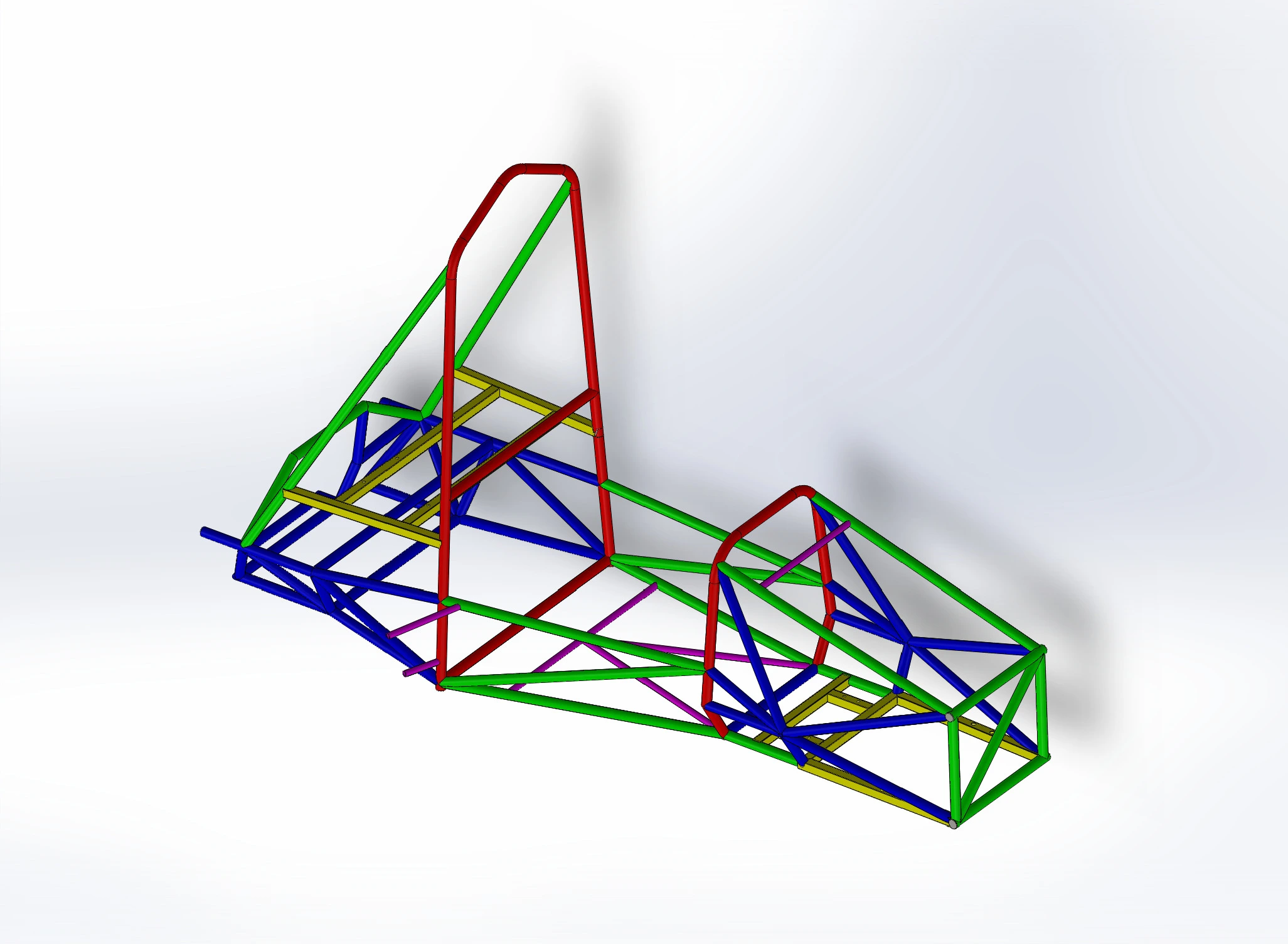
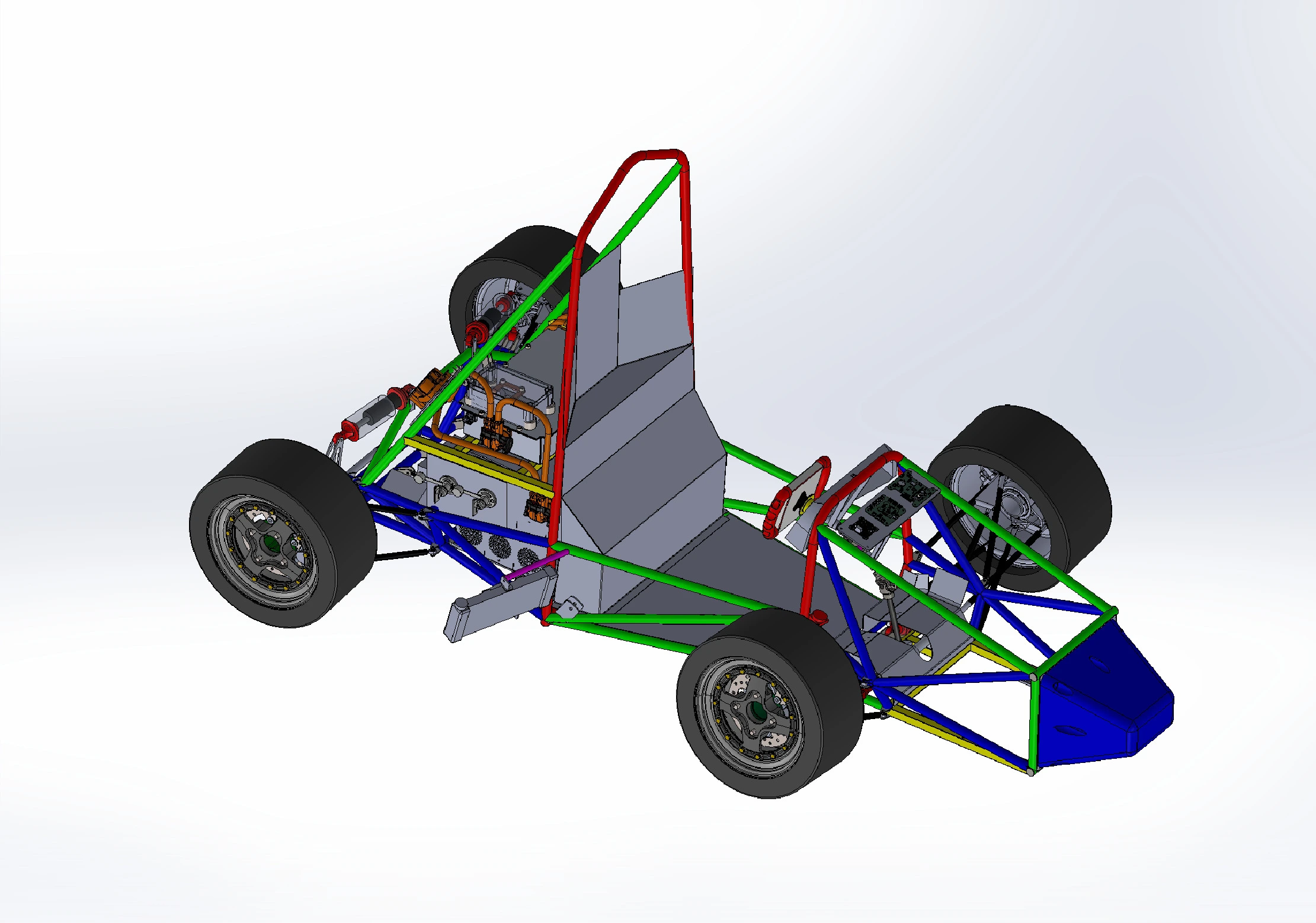
By shrinking the chassis envelope, we dramatically reduced parasitic weight and lowered the overall center of gravity. Our compact-first philosophy prioritizes a tighter packaging space without compromising driver ergonomics or torsional rigidity.
Overcoming Design
Constraints.
Inaccurate
Fabrication
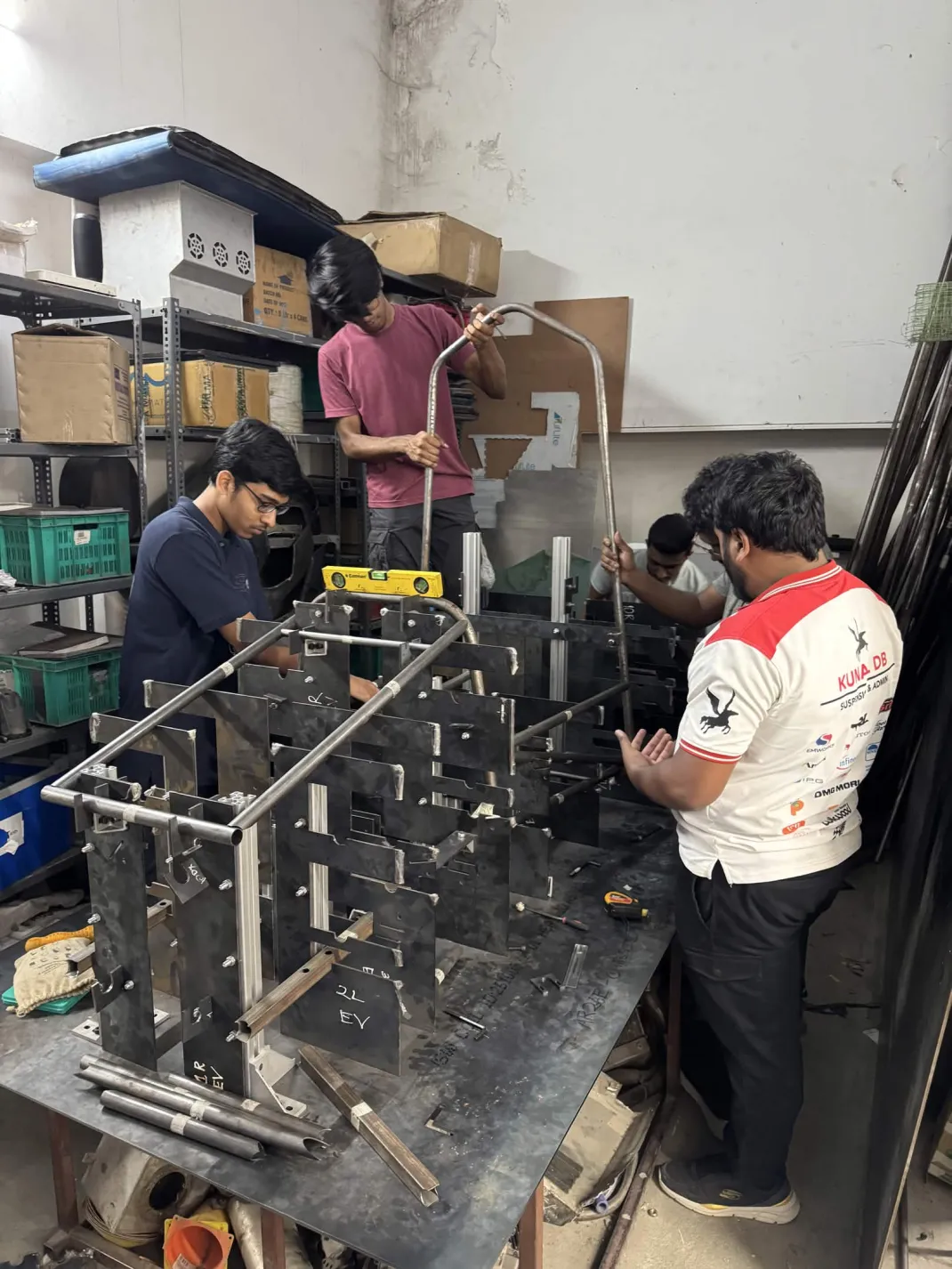
Moved from MDF fixtures to laser-cut Sheet Metal fixtures to ensure aerospace-grade precision during welding.
Excessive
Mass
Solving the weight penalties of previous over-engineered frames through "compact-first" envelope shrinking.
Ergonomic
Constraints
Addressing driver fatigue through data-driven cockpit layouts and driver-in-the-loop feedback mechanisms.
Key Performance Indicators
< 36 kg
Target weight, reduced from 40 kg to lower the polar moment of inertia for faster transitions.
2000 Nm/deg
Torsional stiffness target, ensuring stable suspension geometry under high lateral loads.
Minimizing the overall vehicle footprint through tight component packaging.
Implementing high-tolerance sheet metal fixturing to eliminate welding distortion.
THE WORKSHOP
STANDARD.
We transitioned from standard MDF fixtures to precision laser-cut sheet metal. This critical change eliminates welding distortion and ensures aerospace-grade precision across the entire spaceframe.
Standardized inspection protocols at every junction keep the car race-ready, reliable, and stiff enough for grueling endurance events.
Why AISI 1018 Steel?
Low carbon content ensures strong, consistent beads and minimizes cracking during the intense fabrication process of the spaceframe.
Provides high ease of notch preparation for complex tube junctions, allowing for precise fitment before welding.
Provides a reliable failure mode that absorbs energy plastically during impacts, protecting the driver effectively.
SolidWorks 2025
Utilized for 3D CAD modeling, complex assembly packaging, and weldment design.
Ansys 2023 R2
Employed for Finite Element Analysis (FEA) to validate torsional rigidity and impact safety.
Ergonomic Mapping
Quantitative analysis of driver reach zones and sightlines to dictate structural node placement.
Engineering &
Tech Stack
Utilizing industry-standard tools to seamlessly transition from initial 3D layouts, through rigorous structural FEA validation, to the physical manufacturing jigs.
THE X-RAY
ADVANTAGE.
We adopted a 'compact-first' philosophy. By shrinking the chassis envelope, we reduced parasitic weight and centralized the vehicle's center of gravity. Drag the slider to see how tightly the components are packaged within the bare spaceframe.